
Brocade weaving has long been associated with the daily life of the Mong ethnic people in the two communes of Hang Kia and Pa Co. On holidays and Tet, Mong boys and girls wear brocade clothes, skirts, and white silver bracelets, bustling together to the markets, plum and peach gardens with colorful flowers to chat and meet. The vibrant colors and eye-catching brocade patterns on the shirts and skirts create spiritual vitality, a special highlight in the culture of the Mong ethnic people.
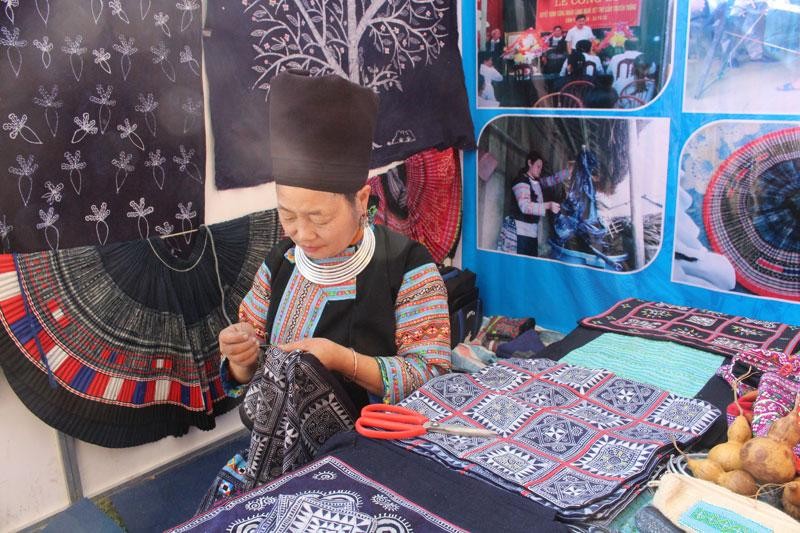
According to Mong customs, brocade weaving is passed down from mother to daughter, from generation to generation. With their skillful hands, the Mong women’s group has woven unique products with delicate motifs and patterns expressing the cultural values and beliefs of the Mong ethnic people. Mong brocade is woven mainly from flax. Mrs. Mua Y Ganh, Head of the traditional brocade weaving village of Pa Co commune, said: Every Mong woman who reaches adulthood must know how to spin flax into threads to weave fabric to serve the daily needs of each family. To make a piece of linen, it must go through many stages, from the beginning of planting until the flax is cut from the forest, dried, pounded until soft, and then spliced. Next, people hang the flax fibers on a frame and spin them into rolls. After that, boil the rolls of yarn in clear ash water to make the flax fibers white, then let them dry. When the yarn is ready, the Mong people will weave the fabric on a loom. To make the fabric pure white so that the indigo adheres better when dyed, women wash, dry carefully, and roll the fabric to make the surface of the fabric smooth and shiny.
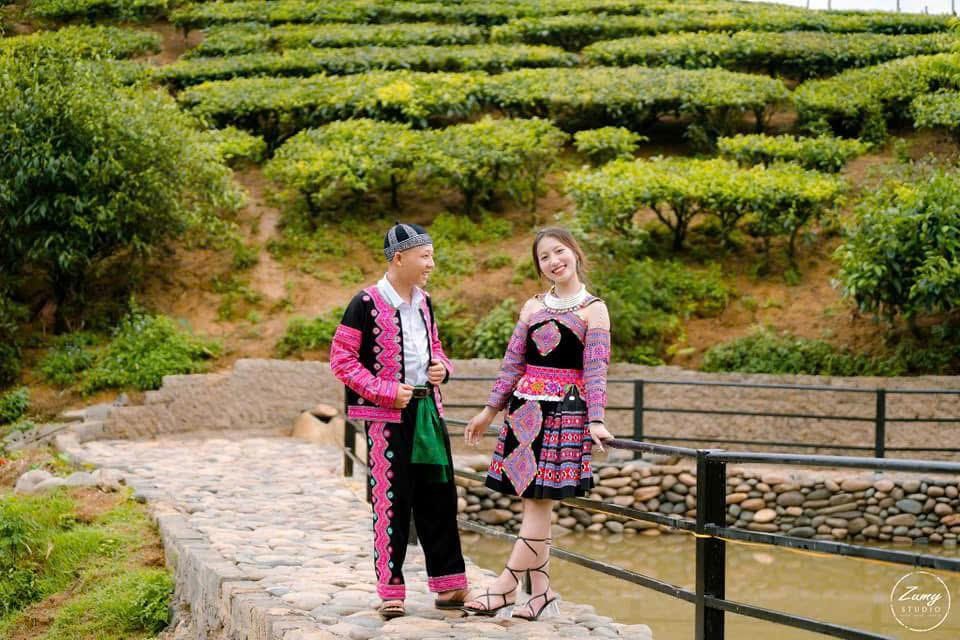
Tourists wearing Mong costumes take photos at Pa Co.
Once the smooth white linen fabric is available, depending on the intended use, people will move on to the stage of drawing beeswax on the fabric. After drawing the pattern, put the fabric in a pot of boiling water, stir well so that the wax layer peels off, leaving beautiful patterns on the fabric. When the fabric meets the requirements, people dye it indigo, embroider patterns, and assemble the fabric into products such as dresses, scarves, bags, etc. For the Mong people, each motif and pattern embroidered on the costume has its own meaning, expressing the cultural and religious values of the people such as: embroidering words on clothes to preserve the writing; embroidering snail motifs on shirts and skirts to pray for a more prosperous life; embroidering spirals to represent the cycle of life; diamond patterns with four spirals symbolizing solidarity in the family and community; fern and fence patterns placed next to each other to represent the arrangement of the Mong people’s living space. Preserving and developing the brocade weaving craft not only helps the Mong people preserve their cultural identity, but also opens up a new direction in sustainable tourism development. When the traditional craft is “breathed into life” by tourism experiences. Hang Kia – Pa Co not only preserves the soul of the village, but also creates more livelihoods for the people right on their homeland. From clothes, handbags, wallets, bi-conical hats, scarves, phone cases will contribute to attracting tourists when coming to Hang Kia – Pa Co.